
About Etymap
Exploring the linguistic history of Britain’s landscape, one place name at a time.
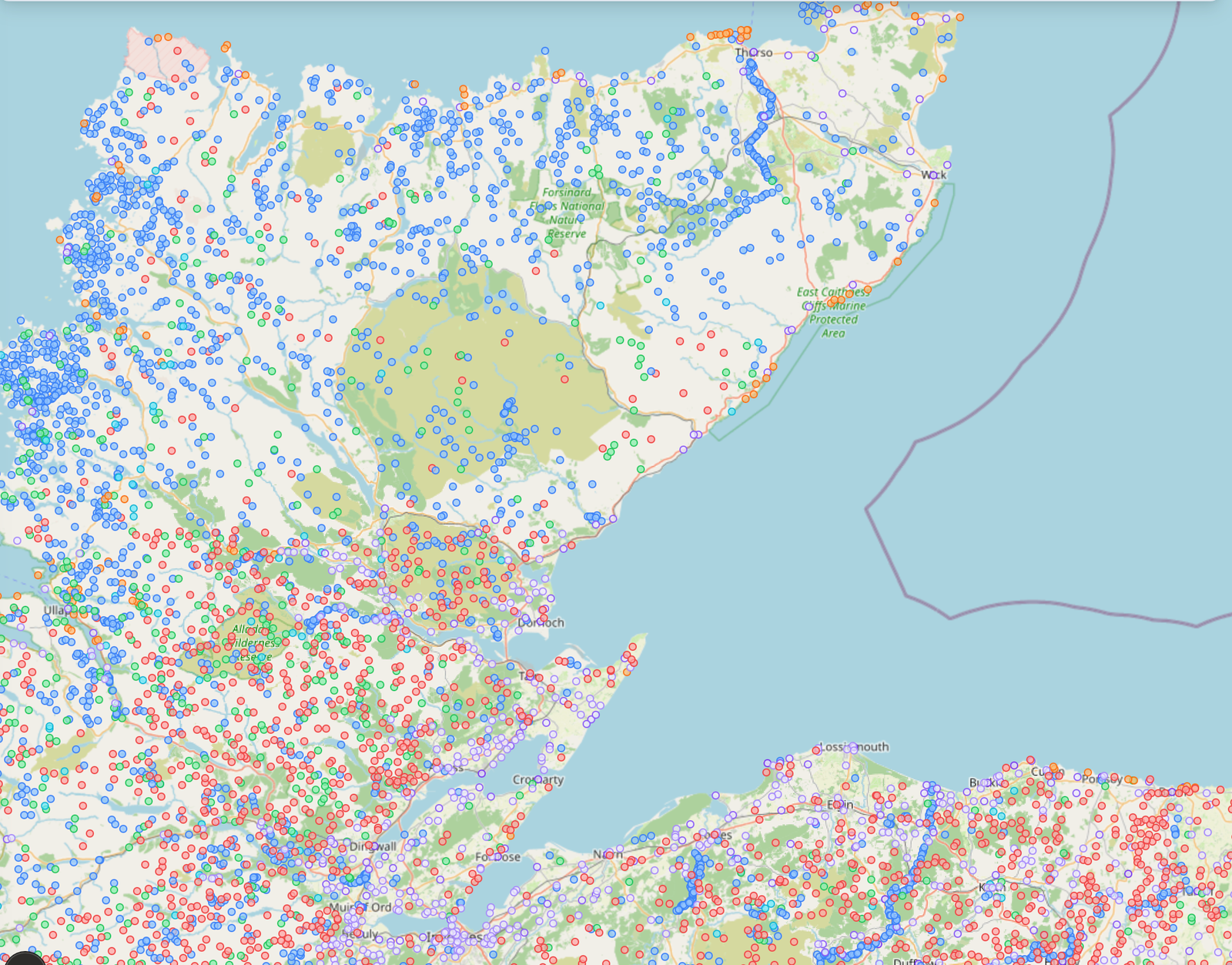
Etymap was created by Alex Hill to make the linguistic history of Britain’s landscape easier to explore. It brings together geographical data, published place-name sources and structured analysis in an interactive map.
Britain’s place names carry thousands of years of history. A hill name can preserve a word from a language no longer spoken. A village name can record the settlement of a farming community from twelve centuries ago. Etymap aims to make those layers visible and navigable.
What Etymap covers
The current focus is on Britain — Scotland, England and Wales — with an emphasis on the northern and upland areas where Gaelic, Old Norse and Brittonic place-name layers are richest. Coverage expands as more data is processed and verified.
How the content is produced
Published place-name reference works
Standard scholarly sources such as dictionaries of place-name elements and regional county surveys.
Geographical datasets
Authoritative data on location, type and administrative region from OS Open Names and the Gazetteer of British Place Names.
Automated processing
A pipeline that applies language models and structured analysis to suggest etymological interpretations at scale. Automated results are not treated as certain and uncertainty is shown clearly.
Limitations
Not every etymology on this site has been individually checked by a specialist. Many records are provisional interpretations produced by automated means. Where a record is marked Automated or Provisional, it should be treated with appropriate caution.
Historical spelling records are included where available, but many places have limited documentary histories and the oldest written forms may post-date the names themselves by several centuries.
An evolving project
Etymap is an evolving project. Corrections, stronger references and alternative interpretations are welcomed. If you spot an error or know of a better source, please use the corrections process.
For more on how content is created and reviewed, see the Methodology and Editorial Policy pages.