
A Farm by Any Other Name: What -ton, -by and Bally- Have in Common
From Old English -ton to Norse -by and Gaelic Bally-, place names tell similar stories in different languages.
By Alex Hill · 14 September 2026
Grimsby and a place beginning Bally- have something in common: both contain an old word for a farm or settlement. One puts that word at the end, the other at the beginning. Read a few names side by side and Britain and Ireland start to look less like a jumble of strange spellings and more like a conversation between languages.
The most familiar English ending is -ton, from Old English tūn. It could mean an enclosure, farmstead or estate long before “town” suggested anything urban. -ham can also mean a homestead or village, though a similar Old English word, hamm, referred to land enclosed by water or marsh. An ending alone cannot always tell you which meaning a particular place had.
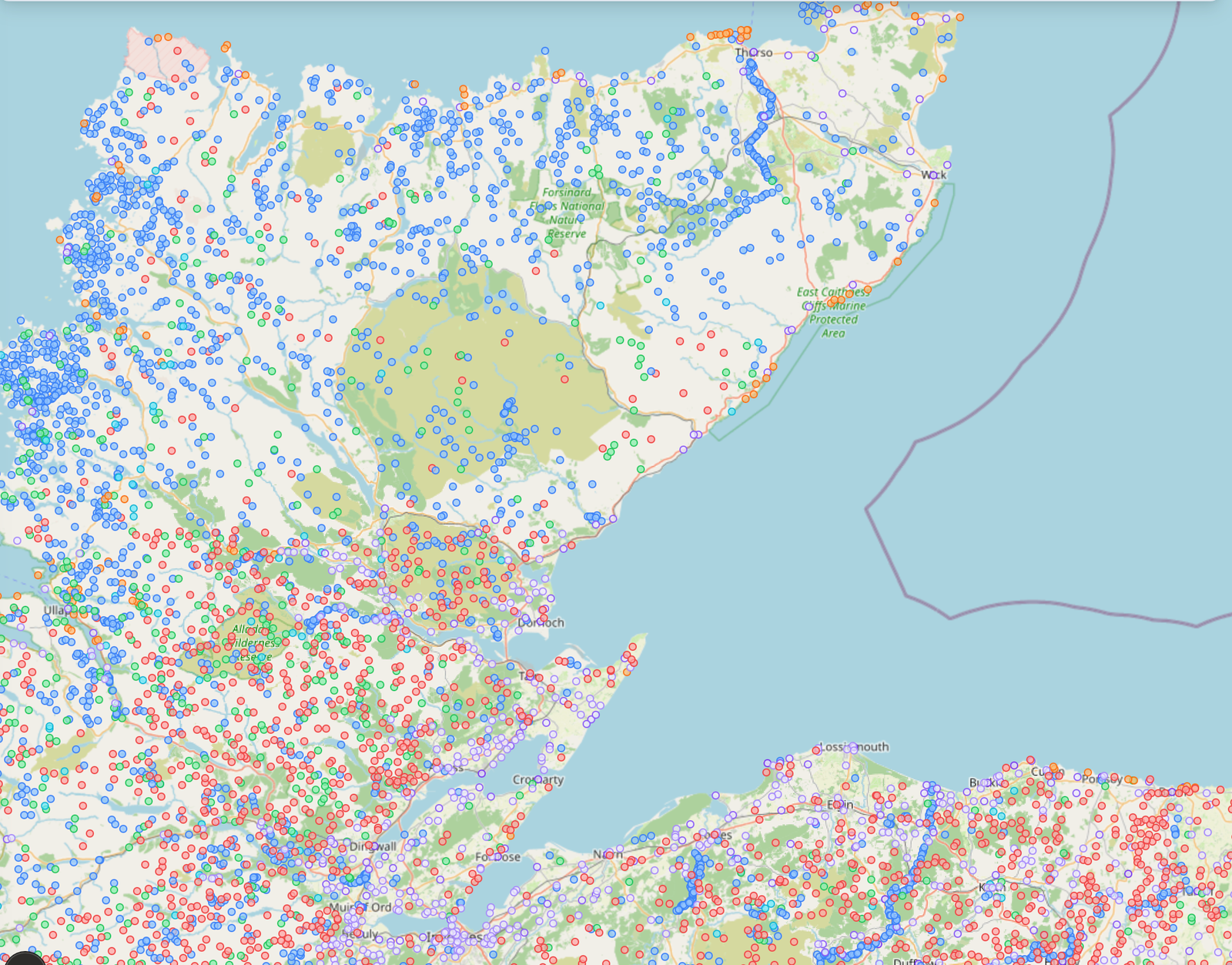
Now compare -ton with -by, from Old Norse býr: another word for a farm or settlement. The two endings can describe much the same kind of place, but they come from different speech communities. Grimsby, for instance, combines a personal name with býr: Grim’s settlement. Names in -by are especially associated with Scandinavian influence in northern and eastern England. -ton is far more widespread. In Etymap’s current settlement records, about 10% of names end in -ton, against 1.2% in -by; those are counts of modern spellings, not verified etymologies or a complete census of settlements.
Old Norse gives us a more specific neighbour to -by: -thorpe, often used for an outlying farm or smaller settlement. -toft can refer to a homestead plot or house-site. Where -by might name the farm or village, -toft can bring you down to the plot it occupies. These distinctions are useful clues, though real places do not always fit neat categories.
The comparison changes shape as you travel west. Gaelic baile also means a farm, township or settlement, but often appears at the front of anglicised names: Bal- in Scotland and Bally- in Ireland. Welsh tref and Cornish tre- can likewise refer to a homestead or settlement. A Bally- name and a -by name may be answering a similar everyday question—whose farm, or which settlement?—in different languages and with the key word in a different place.
Other names describe the land before they describe the people living on it. Old English -field originally pointed to open land, while -ley or -leigh often comes from lēah, a clearing or pasture. Gaelic achadh, meaning a field or open place, survives in some anglicised names as Ach- or Auch-. These names may have begun with the usable patch of ground rather than a word for a village.
That is the pleasure of comparing them. A -ton, a -by and a Bally- name can all preserve an ordinary farm; a -ley and an Ach- name can both point to land people worked. The language changes, and so does the position of the word, but the things worth naming remain remarkably familiar. To work out what any particular place meant, though, you still need its older spellings and local history. A modern ending is where the search begins.